
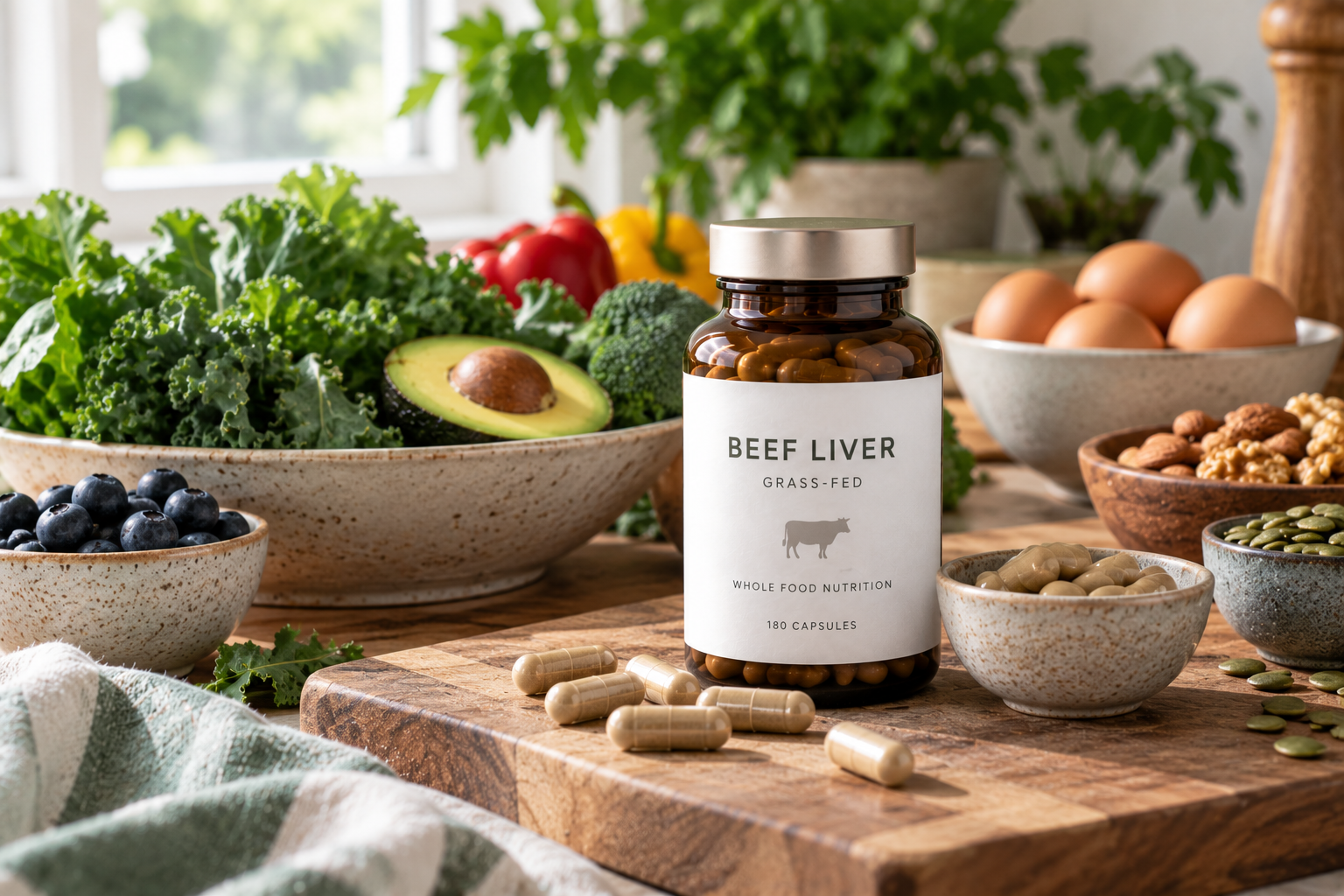
Beef liver pills may look like a simple way to add more nutrients to your diet: take a few capsules, skip the taste of liver, and move on with your day. But the fact that liver is exceptionally nutrient-dense is also the reason these supplements deserve a closer look.
Beef liver provides nutrients such as vitamin B12, preformed vitamin A, copper, iron, and folate. For someone who rarely eats organ meat, that can make a liver supplement an appealing option. But those same nutrients can become a concern when intake gets too high, when several supplements are combined, or when certain medical conditions or medications are involved.
That's the part that often gets lost in the enthusiasm around beef liver supplements.
A liver capsule doesn't automatically outperform eating liver just because it's concentrated, and taking more of it isn't the same as getting more benefit. There's also a difference between supplying nutrients your body needs and proving that a supplement will give you more energy, improve your hormones, clear your skin, or deliver some other specific health benefit.
So, are beef liver pills actually worth taking?
The answer depends less on hype and more on your specific situation — what else you take, what conditions you manage, and how much liver is actually in the product you're using. This guide walks through both sides: what beef liver pills realistically offer, where the risks are, and who should check with a doctor before starting.
At a Glance
Pros
- Concentrated source of B12, heme iron, vitamin A, copper, and folate in one product
- No cooking, shopping for, or tolerating the taste of organ meat
- Easy to travel with and take consistently
- A whole-food-based option for people who'd rather avoid synthetic, single-nutrient supplements
Cons
- Easy to unintentionally over-consume vitamin A and copper, especially alongside a multivitamin
- High in purines, which matters for anyone managing gout or uric acid levels
- Quality and actual liver content vary between brands, and testing isn't standardized
- Cost per gram of actual liver can be higher than people expect
- Not appropriate for several specific groups (more on that below)
The Pros: Why People Take Them
The case for beef liver pills comes down to nutrient density and convenience, not a single miracle mechanism.
A Lot of Nutrition in a Small Package
Liver is naturally rich in vitamin B12, heme iron, preformed vitamin A, copper, and folate — and a capsule format lets you get a share of that without cooking or eating organ meat.
A typical serving of some desiccated beef liver supplements, around 3,000 mg of dried liver, can provide roughly 14 mcg of B12 and substantial amounts of preformed vitamin A, along with smaller amounts of other nutrients. However, nutrient content varies considerably between products depending on how much actual liver is included per serving.
The important point is that this isn't simply a single-nutrient supplement. Beef liver can provide several micronutrients in one product.
Heme Iron Is Unusually Well Absorbed
Not all dietary iron behaves the same way once it's in your body. Heme iron — the form found in liver and other animal foods — is generally absorbed more efficiently than nonheme iron found in plant foods, beans, and fortified cereals.
That makes beef liver a useful dietary source of iron for some people. However, it shouldn't be treated as a replacement for medically recommended iron therapy when someone has a diagnosed deficiency.
One Product, Several Nutrients
Rather than taking separate B12, iron, and vitamin A supplements, beef liver pills bundle several naturally occurring nutrients together in roughly the ratios found in food, rather than in the isolated, high doses found in some supplements.
That combination can be nutritionally relevant because B12, folate, iron, and other nutrients contribute to processes such as red blood cell formation and normal cellular metabolism.
Convenience for a Food Most People Won't Cook
Even people who know organ meat is nutritious often won't buy, prepare, or eat it regularly. Capsules remove the taste, smell, and preparation barrier entirely, and they travel well, which matters if your diet is inconsistent when you're away from home.
How much fresh liver a capsule actually represents varies significantly by brand. Some products list a fresh-liver equivalent, while others don't disclose a conversion at all. That's a reason to check the supplement facts panel for the actual dose rather than assuming every bottle labeled “beef liver” delivers the same thing at the same serving size.
Appeals to a “Whole Food First” Preference
Some people specifically want their supplements to come from food rather than a lab-synthesized vitamin blend. Desiccated organ supplements fit that preference, even though “whole food” doesn't automatically mean better absorbed or safer — it's a preference, not a nutritional guarantee.
The Cons: What Doesn't Get Mentioned as Often
Vitamin A and Copper Add Up Quietly
Beef liver is naturally high in preformed vitamin A and copper. Taken on their own, most servings may be reasonable. The bigger concern is combining a liver supplement with a daily multivitamin or separate vitamin A, iron, or copper supplements without checking the total daily intake.
For context, the tolerable upper intake level for vitamin A in adults is 3,000 mcg RAE (about 10,000 IU) per day from food and supplements combined, and for copper it's 10,000 mcg (10 mg) per day.
A concentrated liver supplement stacked on top of other supplements can bring total intake closer to these limits than people expect. Chronic excessive vitamin A intake can cause problems including nausea, headaches, blurred vision, and liver damage. Excessive copper intake can also cause gastrointestinal symptoms and, over time, liver damage.
These aren't reasons to panic over an occasional serving, but they are reasons to check your totals rather than assume a supplement labeled “natural” is automatically self-limiting.
A Real Consideration for Gout: Purine Content
This is one of the more overlooked downsides. Organ meats, including liver, are high-purine foods, and purines break down into uric acid in the body.
For most healthy people this isn't necessarily an issue, but for anyone managing gout or elevated uric acid, dietary guidance commonly recommends limiting or avoiding organ meats.
Capsule form doesn't change the underlying purine content, so anyone with gout should treat a beef liver supplement with the same caution they'd apply to liver as a food.
Sourcing and Quality Vary More Than Labels Suggest
Liver supplements reflect the quality of the animal and the manufacturing process. Feed, environment, and processing standards can all influence the final product.
“Grass-fed” and “grass-finished” claims may appeal to consumers, but they don't by themselves guarantee a higher-quality supplement or prove that a product is free from contaminants. Third-party contaminant testing can provide additional reassurance, but testing practices aren't standardized across the industry.
Two products can look similar on the front of the bottle and differ meaningfully in what's actually inside.
Cost Per Gram of Liver Can Be Deceptive
A bottle price looks reasonable until you calculate how much actual liver you're getting per serving.
Products with a low amount of liver per capsule can end up costing more per gram than a higher-dose competitor, even if the sticker price is lower. That's why comparing the amount of liver per serving, not just the price per bottle, matters when shopping.
The Capsule Count Can Get Old
Some products require four to six capsules a day to reach the labeled serving. That's a bigger daily commitment than a single multivitamin, and it's worth being honest with yourself about whether you'll actually keep that up long-term versus buying a bottle that ends up half-finished in a cabinet.
It's an Animal Product, Full Stop
Obvious, but worth stating plainly: beef liver pills are not suitable for anyone following a vegan or vegetarian diet, regardless of how the capsule itself is made.
Who Might Actually Benefit From Taking Them
- People who don't eat organ meat but want its nutrient profile without changing how they cook or eat
- People with a confirmed, mild B12 or iron insufficiency who've discussed supplementation with a healthcare provider
- Frequent travelers who want a consistent, shelf-stable source of key nutrients
- People who specifically prefer whole-food-based supplements over synthetic multivitamins
- Athletes or highly active people looking to support iron and B12 status alongside a varied diet, not as a replacement for one
Who Should Be Cautious or Avoid Them
Pregnant or Planning Pregnancy
During pregnancy, excessive intake of preformed vitamin A from liver or liver supplements can be harmful, particularly in early pregnancy.
Because beef liver supplements can provide concentrated amounts of preformed vitamin A, anyone who is pregnant or planning pregnancy should speak with a healthcare provider before taking them.
Anyone Taking Isotretinoin (Accutane) or Prescription Retinoids
Isotretinoin is a vitamin A derivative, and combining it with additional vitamin A from supplements can increase the risk of excessive vitamin A exposure.
Anyone taking isotretinoin or another prescription retinoid should discuss beef liver supplements with their prescribing clinician before using them.
Anyone With Hemochromatosis or Known Iron Overload
Hemochromatosis causes the body to absorb and store too much iron. Beef liver is a source of heme iron, which is generally absorbed efficiently.
That makes liver supplements an inappropriate choice for people managing iron overload unless specifically recommended by their healthcare provider. If you've ever been told your iron or ferritin levels run high, that's worth raising before starting a liver supplement.
Anyone With Wilson's Disease
Wilson's disease impairs the body's ability to clear excess copper, and liver is particularly high in copper.
People with Wilson's disease or those following a medically recommended low-copper diet should avoid beef liver supplements unless their healthcare provider specifically advises otherwise.
People Managing Gout or Elevated Uric Acid
As covered above, liver's high purine content makes it a food that is commonly limited or avoided in gout management. Capsule form doesn't remove the purines, so anyone with a history of gout should discuss beef liver supplements with their healthcare provider before using them.
Anyone Already Taking a Multivitamin or Copper/Iron/Vitamin A Supplement
Not a hard no, but a reason to check labels and add up totals before stacking a beef liver supplement on top of what you're already taking.
Children, Without Medical Guidance
Beef liver supplements are generally formulated and dosed for adults. Giving them to children should go through a pediatrician rather than a general label recommendation.
A Quick Way to Decide
Before buying, it's worth being honest about three questions:
- Do I fall into any of the caution groups above? If so, this is a conversation for a healthcare provider, not a shopping decision.
- Am I already getting vitamin A, copper, or iron from another supplement? If yes, check the combined totals first.
- Will I actually take four to six capsules a day consistently? If the honest answer is no, a lower-dose product or a different format may serve you better.
The Bottom Line
Beef liver pills aren't a scam, and they aren't a miracle either. For the right person — someone who doesn't eat organ meat, wants a whole-food nutrient source, and doesn't fall into one of the caution categories above — they're a reasonable, convenient way to add nutrient density to a diet.
For someone managing gout, iron overload, copper-related conditions, or pregnancy, the same concentration that makes liver appealing is the reason to steer clear or check with a doctor first.
The honest version of this decision isn't “are beef liver pills good or bad?” It's “do the specific nutrients in beef liver make sense for my specific situation?”
That's a more useful question, and it's the one worth answering before adding another bottle to the shelf.
For the full breakdown of what's actually in beef liver pills, dosage ranges, and the best brands on iHerb, see our complete guide to beef liver pills.