
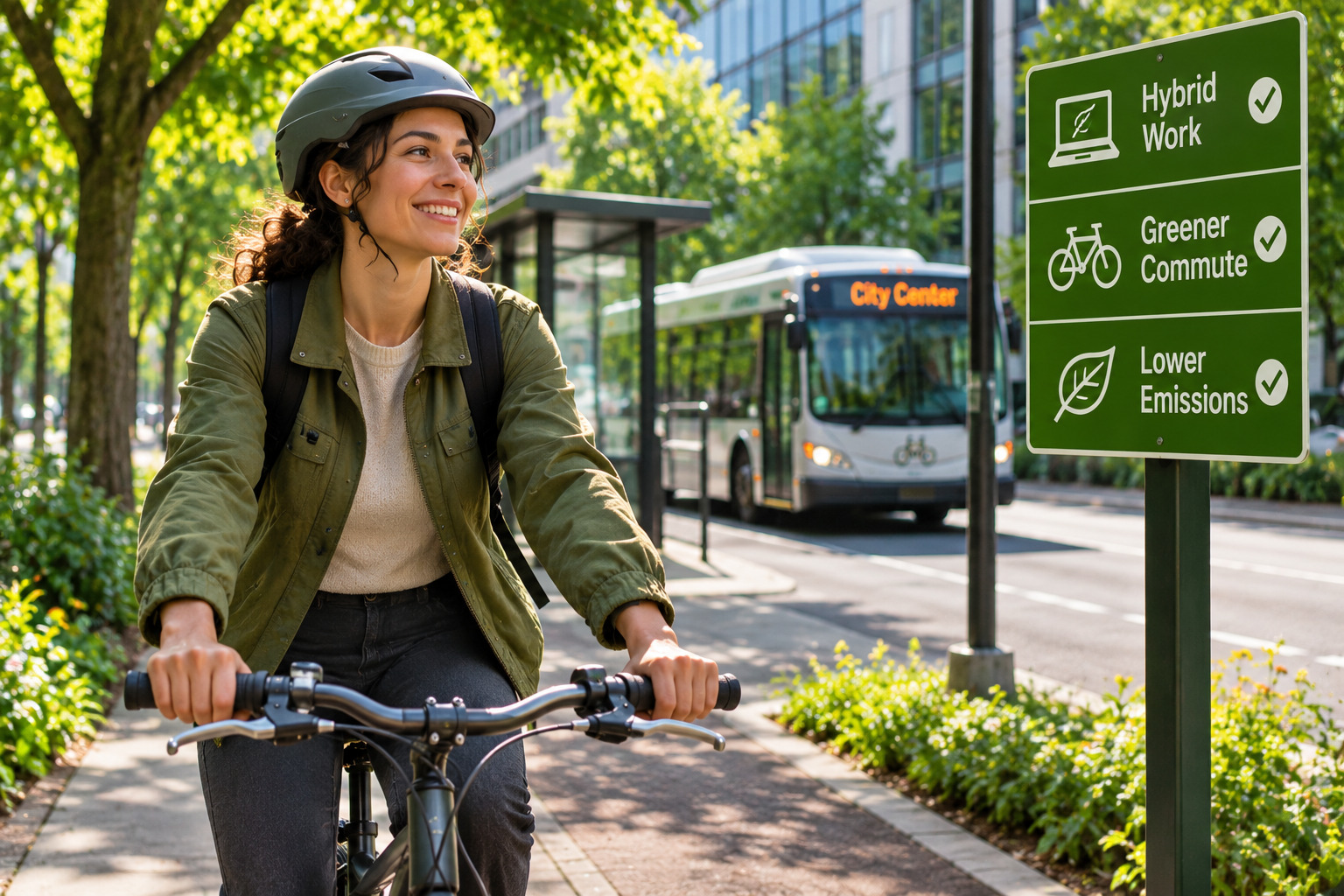
For hybrid professionals and fully remote employees trying to live more sustainably, moving away from daily commuting creates a new kind of uncertainty: the environmental impact of remote work doesn’t disappear, it simply shifts elsewhere. When work moves home, an individual’s carbon footprint becomes more closely tied to home-office energy use and the small, repeatable choices that shape daily environmental habits. This can feel frustrating, because the idea of being “greener” can seem vague, even when daily routines have become more predictable. Understanding the environmental impact of sustainable remote can turn those routines into a measurable opportunity.
Understanding Where Emissions Go When You Work Remotely
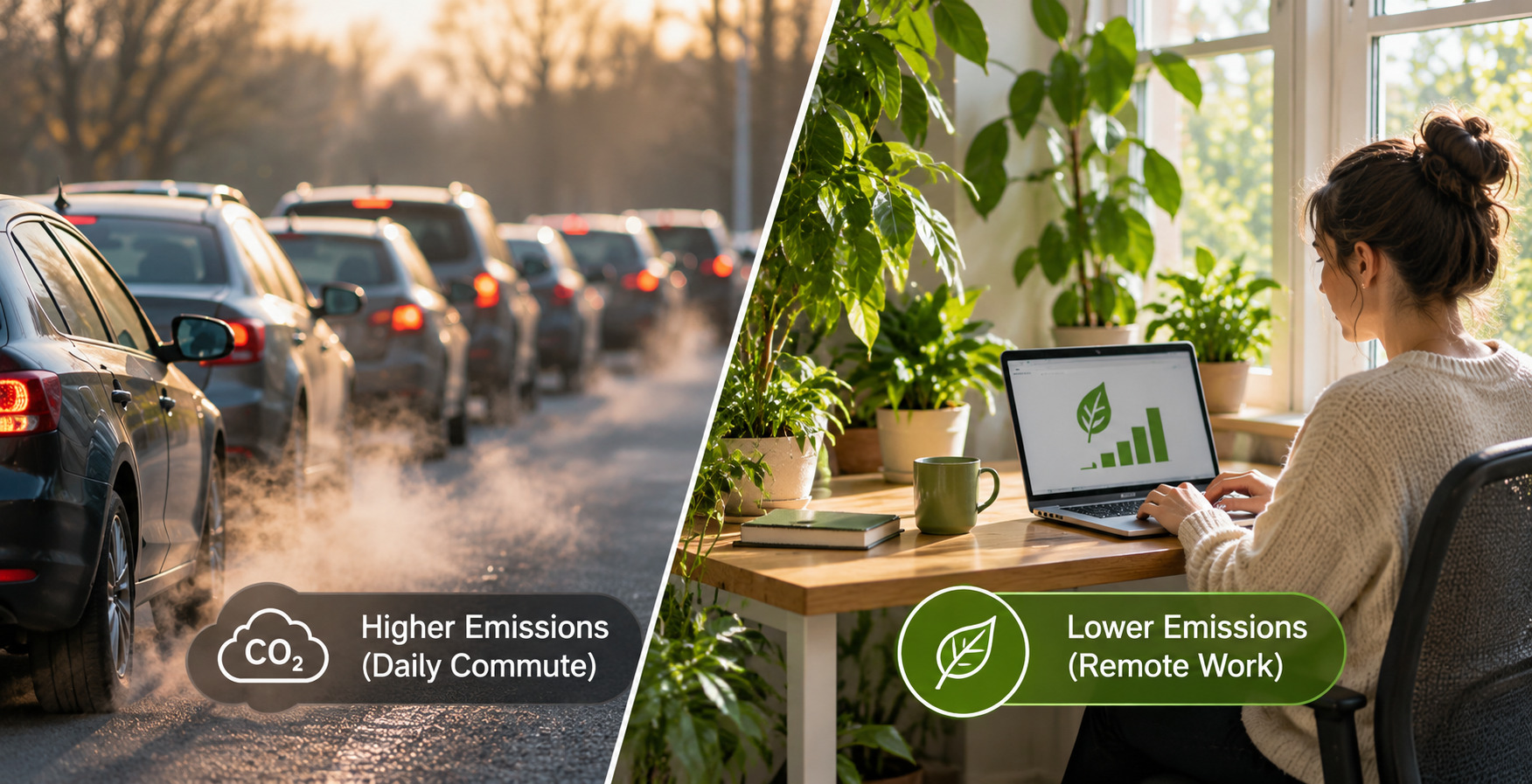
Remote work reduces travel-related emissions, but your carbon footprint doesn’t disappear. It simply comes from different sources. A carbon footprint includes emissions created both directly and indirectly, so the key is tracking what replaces the daily commute. For most people, this means home heating or cooling, the electricity used by work equipment throughout the day, and changes in everyday routines, such as preparing more lunches at home.
This matters because the assumption that “working from home is greener” can be true or misleading, depending on your setup. By identifying where emissions shift, you can focus on the biggest opportunities to reduce them without worrying about minor changes that make little difference.
Think of it like moving a monthly bill from one account to another. Your commuting expenses disappear, but new line items show up on your home energy statement, and home energy data makes those line items visible. With a clearer picture of your energy consumption, you can make informed decisions about your devices and power settings to reduce home-office energy use fast.

Cut Home-Office Power Use With Smarter Tech and Skills
Once you’ve identified where remote-work emissions shift, the next step is reducing the everyday electricity your home-office consumes. Remote workers can lower their environmental impact by choosing energy-efficient devices that meet their needs rather than using unnecessarily powerful equipment. Enabling low-power and sleep settings also helps prevent devices from consuming electricity when they are not in use. Sustainable digital practices matter, too. Using digital resources mindfully can help reduce energy consumption and make remote work more environmentally friendly over time.
Just as importantly, an efficient home-office setup should also be a secure one. Maintaining a secure home network and protecting digital resources can prevent disruptions that lead to unnecessary work, extra device usage, or unwanted data exposure. If you want to build the technical knowledge to manage secure, efficient remote-work environments, an online bachelor’s pathway in cyber security can help you develop those skills.
Habits That Keep Your Home-Office Low-Carbon
Small, repeatable habits can turn working from home into a consistent opportunity to reduce your carbon footprint rather than a one-time setup project. Pick a few practices that fit your schedule and stick with them.
Start-and-Stop Power Sweep
- What it is: Shut down your work zone at the end of the day: lights off, charger unplugged, power strip switched off.
- How often: Daily
- Why it helps: It prevents idle devices from consuming electricity between work sessions.
Two-Tier Comfort Routine
- What it is: Adjust clothing or add a blanket before touching the thermostat.
- How often: Daily
- Why it helps: It reduces heating and cooling demands during long hours at your desk.
Quiet Focus Block
- What it is: Use the eliminate all notifications approach for one dedicated deep-work session.
- How often: Daily
- Why it helps: Fewer interruptions mean fewer “redo” cycles that waste time and energy.
Low-Waste Desk Reset
- What it is: Refill your water bottle, choose reusables, and batch-print only essential pages.
- How often: Weekly
- Why it helps: It reduces single-use waste, unnecessary printing and delivery demand.
Home Energy Check-In
- What it is: Review your utility dashboard or smart plug logs and tweak one setting where needed.
- How often: Weekly
- Why it helps: The home-to-grid connection improves when households smooth out waste.
Remote Work and Carbon Footprint: Common Questions
Q: How much difference does skipping a commute really make?
A: For many people, commuting is one of the biggest daily emissions sources. The EPA notes the transportation sector accounts for 27% of total greenhouse gas emissions, so fewer car trips can make a meaningful difference. Start by tracking how many commuting miles you avoid each week.
Q: Can working from home increase my emissions because I use more heating or AC?
A: It can, especially if you heat or cool an entire home all day. Limit heating or cooling to the room you use, close doors, and try adjusting your clothes before adjusting the thermostat. A simple timer or smart plug can prevent “all-day comfort drift.”
Q: What if I’m hybrid and only remote one or two days a week?
A: Hybrid working can still help because even partially reducing your commute can lower fuel consumption and traffic-related emissions. The biggest gains come from consistency, so keep your home-office setup efficient on remote days and batch in-office errands into one trip whenever possible.
Q: Should I buy new gear, like a monitor or standing desk, to be sustainable?
A: Not necessarily. Using what you already own longer is often the lower-waste choice. If you decide to upgrade, consider refurbished products, choose efficient models, and donate or recycle the old equipment responsibly.
Q: How do I know whether my home energy use is canceling out the commute savings?
A: Use your utility portal to compare energy consumption on days when you work remotely versus days you do not, then focus on the biggest spikes in usage. An approach like an annual staff survey that collects home energy usage shows you can measure progress using simple inputs rather than requiring perfect math.
Make Remote Work Greener With One Weekly Habit Change
Remote work can reduce emissions, but the overall impact becomes less straightforward when home energy use and everyday convenience are factored in. The most effective approach is to focus on the biggest opportunities for improvement, review the trade-offs honestly and maintain sustainable remote-work habits consistently rather than striving for perfection.
Over time, these small changes can support meaningful environmental impact reduction while keeping workdays practical and comfortable. Greener remote work is built through small, repeatable choices, not an all-at-once commitment to perfection.