

Nearly half of Americans (48%) don’t get the magnesium their bodies typically need from food and drink alone [2]. While this doesn’t necessarily mean they have a magnesium deficiency, it raises an important question: could a supplement help you meet your needs?
Magnesium glycinate has become a popular choice for people looking to support better sleep, relaxation, and muscle function. But how much of these benefits does the evidence actually support? And with so many products on the market, how do you know whether you’re getting a worthwhile supplement or simply paying for a convincing label?
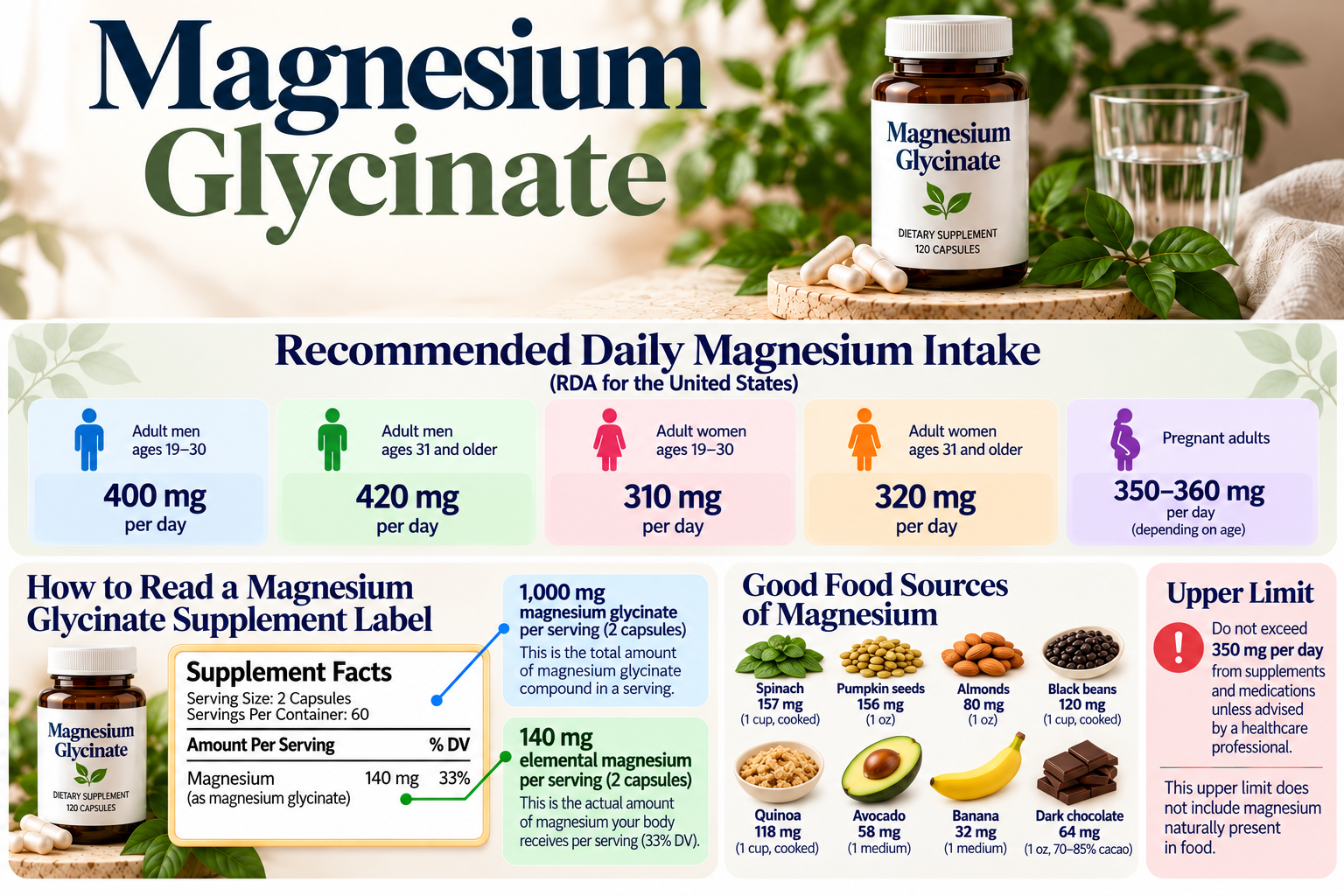
One detail makes a bigger difference than many buyers realize: a product advertised as containing 1,000 mg of magnesium glycinate may provide just 140 mg of elemental magnesium. The rest of the weight comes from glycine it is bound to. This is why the amount of elemental magnesium – the actual magnesium supplied by the supplement – matters more than the headline number on the bottle.
Fortunately, you don't need to be a nutrition expert to spot the difference between a compelling label and a worthwhile product.
In this guide, we’ll explore what magnesium glycinate can realistically do, who may benefit from taking it, how much to consider, and what to look for before buying.

What Is Magnesium Glycinate?
Magnesium glycinate, also called magnesium bisglycinate, is magnesium bound to glycine, an amino acid. It is popular for daily use because of its reputation for being gentle on the stomach and for good bioavailability, meaning how readily the body absorbs and uses it.
How absorption works
To be absorbed, magnesium first has to be dissolved in your gut. From there it crosses the wall of the small intestine two ways: passively between cells, and through channels in the cells themselves [10]. Acid helps keep magnesium dissolved [10], and long-term acid-reducing medicines can affect magnesium levels [2].
That is why the form matters. Magnesium oxide dissolves poorly, so little of it gets across: in one human study, only about 4% was absorbed, while forms that dissolve well did significantly better [9]. Glycinate pairs magnesium with a small amino acid, and in a gut-simulation study a glycinate-based product ranked among the most bioavailable of 15 supplements, meaning its magnesium stayed available for absorption [8]. That is the case for glycinate: lab tests point to it delivering magnesium in a form that is ready to be absorbed.
What Magnesium Does, and What to Expect
Magnesium’s benefits fall into two groups. The first is the essential work it does in the body, which a supplement helps cover when your intake falls short. The second is the extra effects people choose it for, where research is still building. Knowing which is which keeps your expectations realistic and your money well spent.
The essentials
- Energy. Magnesium is required for hundreds of enzyme reactions, including those that make and use ATP, the body’s main energy-carrying molecule [2]. When intake is too low, fatigue, weakness, reduced appetite, and nausea can follow [2].
- Muscles and nerves. Magnesium helps muscles contract and relax and supports normal nervous-system function. Low levels can contribute to weakness, cramps, and other neuromuscular symptoms [2].
- Bones. Magnesium is part of bone structure and plays a role in how the body uses calcium and vitamin D [2]. It is one piece of a bone-health routine that also includes calcium, vitamin D, and movement.
These roles are the strongest argument for the supplement: if your diet leaves you short, topping up restores what your body is already built to use.

The extras people choose it for
- Sleep. Many people take magnesium glycinate in the evening, and it makes a wind-down routine easy to stick to. The research is modest, but a review of studies in older adults found that magnesium supplementation may help reduce the time it takes to fall asleep [3]. Think of it as one supporting piece of a good bedtime routine, not a sleeping pill.
- Calm and stress. A systematic review suggests magnesium may ease subjective anxiety in some people, particularly those more vulnerable to it [4]. Think of it as nutritional support, not a treatment for an anxiety disorder.
- Blood pressure. Supplementation may produce a small reduction in blood pressure in some people, and the effect varies [2]. It does not replace prescribed treatment.
- Cramps. Magnesium is more likely to help when cramps are linked to a deficiency. For ordinary cramps, a Cochrane review found it unlikely to make a meaningful difference in older adults [6].
Is It for You? Who Benefits Most and Who Should Check First
Magnesium glycinate makes the most sense if you can answer yes to one of these:
- Do seeds, nuts, legumes, whole grains, and leafy greens rarely make it onto your plate? They are the main sources of magnesium, so if the answer is yes, a supplement can fill the gap [2].
- Do other magnesium forms upset your stomach? Glycinate is often a more comfortable alternative, though individual experiences vary.
- Has a healthcare professional pointed to low magnesium? In that case a supplement is a targeted fix, not a guess.
Talk to a professional first if
- You have kidney disease. The kidneys regulate magnesium, and when they are significantly impaired it can build up to dangerous levels. Do not take magnesium supplements without medical guidance [2].
- You take prescription medication. Magnesium can reduce the absorption of some tetracycline and quinolone antibiotics and oral osteoporosis drugs (bisphosphonates). Some diuretics and long-term acid-reducing medicines also affect magnesium levels [2]. A pharmacist can tell you how to space doses.
- You are pregnant, breastfeeding, or planning a pregnancy. Magnesium needs are higher in pregnancy, but whether you need a supplement, and how much, depends on your situation.
- You already take several supplements. Multivitamins, electrolyte products, sleep aids, antacids, and laxatives can all contain magnesium. Add it all up before you add another source.
How Much to Take
There is no single official dose for magnesium glycinate itself. What matters is the amount of elemental magnesium, meaning the actual magnesium the compound supplies, and your total intake from food, supplements, and medicines.
Know your numbers
For adults, the US recommended dietary allowance (RDA) is 400–420 mg a day for men, 310–320 mg for women, and 350–360 mg during pregnancy. These figures count magnesium from all sources, food and supplements together. The adult upper limit is 350 mg a day, and it applies only to magnesium from supplements and medications.
These are US reference values from the NIH Office of Dietary Supplements, not universal European recommendations [1, 2]. The upper limit is a safety ceiling for supplemental magnesium, not a target to aim for.
The upper limit sits below the RDA because it leaves out magnesium from food. Magnesium that occurs naturally in food is generally not a concern for healthy people. High supplemental doses are another matter, particularly with impaired kidney function [2]. In Europe, EFSA sets a lower upper level of 250 mg a day, but it applies only to certain magnesium salts, not to every formulation [5].
Read the label by elemental magnesium
This is the step most buyers miss. A serving of two capsules might list 1,000 mg of magnesium glycinate and, on a separate line, 140 mg of elemental magnesium.
So you are getting 140 mg of actual magnesium, not 1,000 mg. On a US label that is 33% of the Daily Value of 420 mg [2]. On a European label it would show as 37%, because the EU nutrient reference value is 375 mg [7]. The percentage depends on where the product is sold, so always go back to the milligrams.
Here is the difference in practice. A label that shows only “Magnesium glycinate 1,000 mg” tells you almost nothing about how much magnesium you are getting. A clear label reads something like “Magnesium (as magnesium bisglycinate) 140 mg,” so you know exactly what a serving provides. If you cannot find the elemental magnesium line, you cannot compare the product with anything else.
When to take it
There is no strong evidence for one best time of day, so pick a time you will stick to. Many people take it in the evening as part of a wind-down routine, while others prefer breakfast or dinner. Taking it with food may ease stomach discomfort.
Timing does matter with certain medicines. As a general guide, take tetracycline or quinolone antibiotics at least 2 hours before, or 4–6 hours after, a magnesium supplement, and keep oral bisphosphonates at least 2 hours apart from it [2]. The right spacing depends on the specific medicine, so confirm it with a pharmacist.
How long does it take to work?
There is no well-established timeline, and it depends on why you are taking it. If you are correcting a low intake, you are restoring a baseline, not flipping a switch. Effects on sleep, anxiety, or cramps are not immediate or predictable, so pick the one thing you hope to notice, track it over time, and talk to a healthcare professional if nothing changes. A quiet result is not always a failure: it may simply mean magnesium was not what you were missing.

Magnesium Glycinate vs. Citrate vs. Malate vs. L-Threonate
Not every magnesium supplement is the same. The form, meaning what the magnesium is bound to, affects how well it dissolves, how your stomach handles it, and what it is usually chosen for. Here are the four most common.
Glycinate (bisglycinate): the everyday choice
Glycinate is magnesium bound to glycine, an amino acid. It is a popular choice for daily use: it has a reputation for being gentle on the stomach, and lab results on its absorption are encouraging [8]. If you want a form that is easy to take every day without digestive drama, this is the one to start with.
Citrate: the choice when constipation is a concern
Citrate is magnesium bound to citric acid. It dissolves well and is absorbed better than magnesium oxide [2], and it has a second job: its water-drawing effect softens stools. If you also want help with occasional constipation, citrate’s stool-softening effect can work in your favor, though it can cause diarrhea or cramping in some people.
Malate: marketed for energy and muscle comfort
Malate pairs magnesium with malic acid, a compound involved in cellular energy production, and it is commonly chosen by people who want support for energy and muscle comfort.
L-threonate: marketed for memory and focus
L-threonate is chosen by people interested in supporting memory and concentration.
A note on safety
Any magnesium supplement can cause diarrhea, nausea, or cramping, particularly if you take too much. Taking it with food or adjusting the dose may help with mild discomfort. Excess magnesium from supplements, laxatives, or antacids can be dangerous when kidney function is impaired. Seek urgent medical attention for serious symptoms such as difficulty breathing, an irregular heartbeat, or pronounced weakness after taking a magnesium-containing product [2].
Before You Buy: Compare These Six Details
A good purchase starts with the information on the back of the bottle — not the biggest promise on the front. Use this checklist to compare products on the details that affect dose, quality, and value.
- Elemental magnesium per serving: compare the actual magnesium, not the weight of the glycinate compound.
- Serving size: confirm how many capsules deliver that amount.
- Ingredients and transparency: read the full ingredient list and look for clear manufacturer information.
- Quality testing: look for independent testing or certification, and do not assume every product has it.
- Value: compare cost per serving, not bottle price or capsule count. For a fair comparison, divide the price per serving by the elemental magnesium it provides.
- Suitability: check your diet, medicines, and health conditions first.
The Verdict: Is It Worth Taking?
Magnesium glycinate is worth considering if your diet doesn't provide enough magnesium or you want an alternative to other forms that may upset your stomach. People with low magnesium and those seeking better sleep and relaxation are most likely to notice an effect from taking magnesium glycinate.
When it comes to choosing the right product, what matters most is not the biggest number on the bottle or the boldest promise on the label. It's how much elemental magnesium you get per serving, how transparent the manufacturer is about its ingredients and quality testing, and whether the price represents good value.
In our next guide, we compare 7 popular magnesium glycinate supplements on iHerb, looking at elemental magnesium per serving, ingredient transparency, quality testing, and cost per serving – so you can see which products offer the best value and make a more informed choice.

Medical disclaimer: This article is for educational purposes only and is not a substitute for professional medical advice, diagnosis, or treatment.
References
- National Institutes of Health, Office of Dietary Supplements. Magnesium: Fact Sheet for Consumers. https://ods.od.nih.gov/factsheets/Magnesium-Consumer/
- National Institutes of Health, Office of Dietary Supplements. Magnesium: Fact Sheet for Health Professionals. https://ods.od.nih.gov/factsheets/Magnesium-HealthProfessional/
- Mah J, Pitre T. Oral magnesium supplementation for insomnia in older adults: a systematic review and meta-analysis. BMC Complement Med Ther. 2021;21:125. https://pubmed.ncbi.nlm.nih.gov/33865376/
- Boyle NB, Lawton C, Dye L. The effects of magnesium supplementation on subjective anxiety and stress: a systematic review. Nutrients. 2017;9(5):429. https://www.mdpi.com/2072-6643/9/5/429
- European Food Safety Authority (EFSA). Summary of Tolerable Upper Intake Levels: Magnesium. The 250 mg/day upper level applies to specified readily dissociable magnesium salts, excluding magnesium naturally present in foods and beverages. https://www.efsa.europa.eu/sites/default/files/2023-11/ul_summary_tables-version-8.pdf
- Garrison SR, Korownyk CS, Kolber MR, et al. Magnesium for skeletal muscle cramps. Cochrane Database Syst Rev. 2020;9:CD009402. https://doi.org/10.1002/14651858.CD009402.pub3
- Regulation (EU) No 1169/2011 on the provision of food information to consumers, Annex XIII (nutrient reference values). https://eur-lex.europa.eu/eli/reg/2011/1169/oj
- Blancquaert L, Vervaet C, Derave W. Predicting and testing bioavailability of magnesium supplements. Nutrients. 2019;11(7):1663. https://www.mdpi.com/2072-6643/11/7/1663
- Firoz M, Graber M. Bioavailability of US commercial magnesium preparations. Magnes Res. 2001;14(4):257-262. https://pubmed.ncbi.nlm.nih.gov/11794633/
- Chamniansawat S, Suksridechacin N, Thongon N. Current opinion on the regulation of small intestinal magnesium absorption. World J Gastroenterol. 2023;29(2):332-342. https://wjgnet.com/1007-9327/full/v29/i2/332.htm