
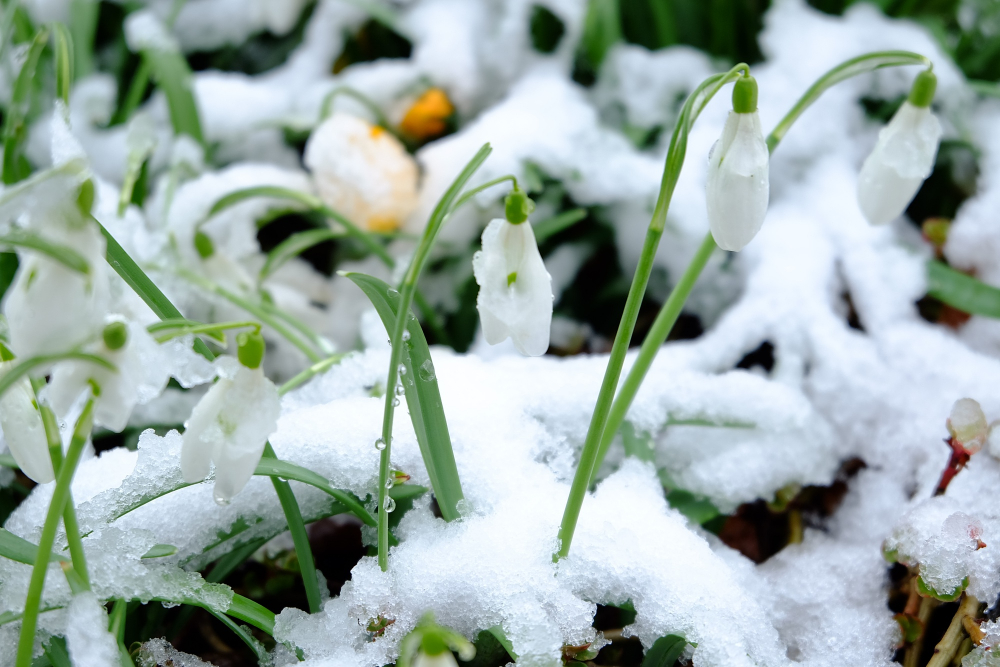
The seemingly never-ending winter really takes its toll on yard grass — especially after a lot of snow, ice and below freezing temperatures. Reviving your lawn after a long winter starts in early spring, and the sooner you do it, the better.
From preventing (and killing) weeds and crabgrass, to watering, to fertilizing… spring lawn recovery begins as soon as you get a mindset, and then get to work.
Spending time in your backyard can improve your wellbeing – one reason to keep up the lawn every season. Another reason? If you want to put your home on the sales market, the front and back yards are the first thing a potential buyer sees when arriving at the property. Because curb appeal is everything, the lawn should look perfect.
Spruce up the lawn after a long, snowy winter – these spring lawn care tips will get you started on your front and backyard oasis.
Yard Cleanup
Winter winds bring dead and water-logged leaves, branches, and trash to your yard. Remove all debris so that grass and soil can “breathe” while recuperating from harsh weather.
Rake out thatch (stems, rhizomes, dead roots, stolons that grow between grass blades). Inspect your yard for bare spots.
Check your lawn for disease and pests
To relieve compaction, aeration is the process of removing soil core plugs from the turf. Overly-dense sod won't provide oxygen, water and nutrients. Core aeration is a big job — but you can DIY with a machine or hire a lawn care professional.
Crabgrass and Weeds
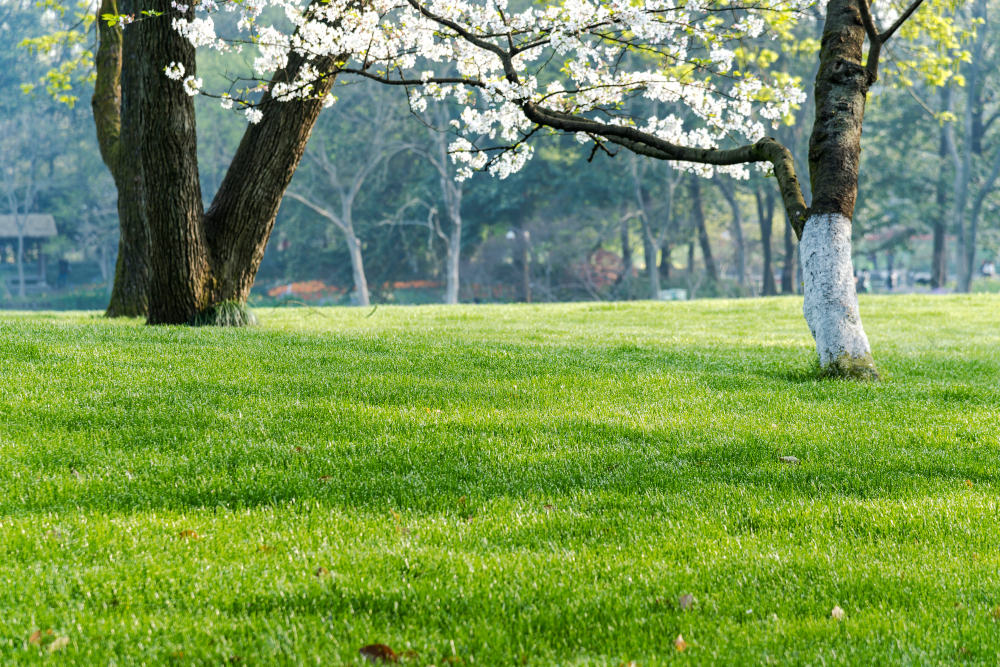
Crabgrass and weeds seem to come from out of nowhere, and truth be told, you cannot get rid of crabgrass and weeds completely (or forever). From spring to fall, weedy seeds and spores float through the air, landing where they will — mostly in the grassy turf.
Applying pre-emergent herbicides helps to keep weed seeds from germinating. Timing is everything, as it can be a guessing game for when these weed-seed killers should soak into the ground. Soil temperatures and environmental factors play their part.
Apply pre-emergent weed killers when the soil warms up to about 55 degrees, and stays that way for several days. Soil thermometers are available for purchase online and at your local garden or hardware store.
Add post-emergent weed killers to the turf as soon as you see weeds sprouting up. When you’re spraying… watch out. The weed killing poison can affect nearby greenery such as fruits, herbs, vegetables, shrubs, and trees.
Fertilize
Feeding the grass isn’t just a matter of tossing chemicals here and there.
Slow and controlled release fertilizers are for cool-season grasses (fescues, perennial ryegrass, and Kentucky bluegrass), and warm-season varieties (St. Augustine, Bermuda, Zoysia, and Bahia, etc.). Warm-season grasses thrive in temperatures above 75 degrees.
Fertilizers are classified as either synthetic or organic
Synthetic fertilizers are chemically-based granules; they tend to last longer and work better in their slow-released form.
Organic fertilizers like grass clippings, manure, and bone meal come from plants and animals. Organics may wash away during hard rains and need to be monitored for effectiveness.
The amount of fertilizer needed depends on your yard’s measurements — follow package directions.
Overseed
Bare spots on an otherwise lush lawn are hard to ignore. Overseeding thickens the lawn and works for a few dead patches, but if your lawn is really torn up, you may want to consider hiring a contractor for a complete do-over. (DIY lawn restoration is a lot of work, and if you do it wrong, it will cost more money to remedy).
Water
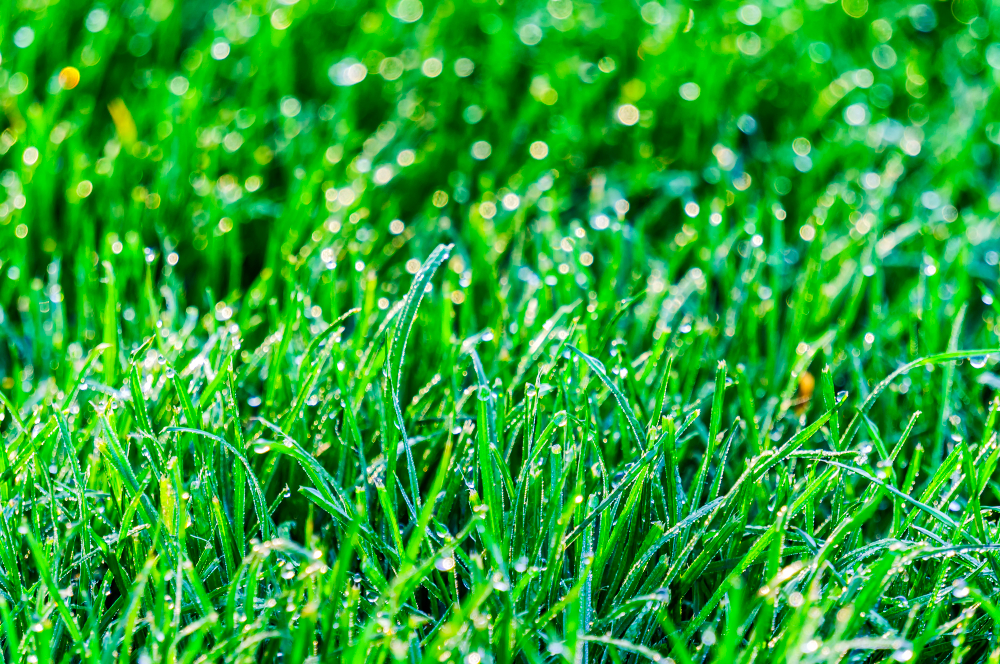
Water is the essence of life (well, one of them, anyway). And you’d think that being under snow and ice all winter would provide enough water for your lawn... but, not always. Grass needs a balance of water; enough to discourage drought but not too much that it leads to shallow roots, pests, and fungi.
When watering your lawn:
- Choose a time early in the morning, so that the water won’t dry up in the heat of the day.
- Water only when the grass and soil appear dry. Warm-season grasses need about 1 inch of water per week; cool-season varieties need about 1 to 1.5 inches.
- Monitor the weather forecast for spring rains.
The Big Mow
Sharpen your lawn mower’s cutting blades and adjust the height before the first trim of the season.
Every two weeks in the beginning of spring, slice off about one-third of the grass blades. (A deeper cut may shock and stress the grass). As the lawn thickens, cut your lawn once a week.
Change directions each time you mow. Do not cut wet grass.
Spring Lawn Care as Exercise
Keeping your lawn in good shape is a great way to keep yourself in shape, too. Live well, get outside, breathe in the fresh air and soak in the sunshine… Spring is coming, sooner or later.
Written by Teri Silver
About the Author
 Teri Silver is a journalist and outdoor enthusiast. She and her husband live on 5 acres with a vast lawn, three gardens, a farm, a pond, many trees, and a lot of yard work! The best parts of the year are summer and fall when home-grown veggies are on the dinner table.
You may also like
Best Practices for Trees, Shrubs & Roses in Dormant Season
How Spending Time in Your Backyard Can Improve Your Well-Being
Designing a Family-Friendly Landscape: Safe and Fun Outdoor Spaces